Solar Energy and Land Use
America needs energy, and America needs its farms. Learn how farmers and ranchers are finding new opportunities by adding solar on part of their property
Solar Project Footprint
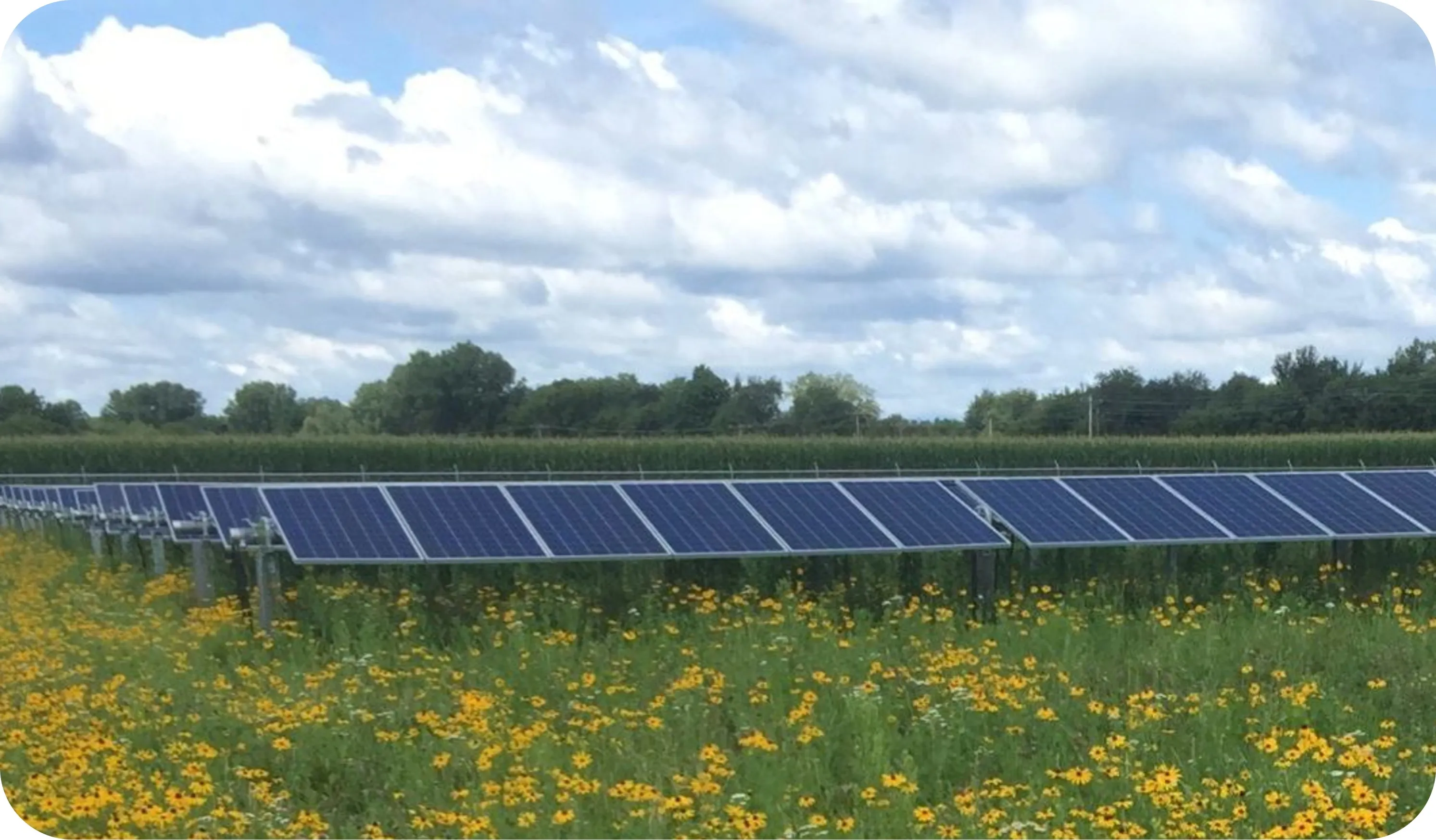
As a general rule, utility-scale solar energy facilities require between four and eight acres of land per megawatt (MW) of energy capacity. More than half of this area is the space between the panels to prevent shading and is usually planted with native or noninvasive grasses.
In recent years, solar panels have become much more efficient, requiring less land to generate the same amount of power. A 2022 study by Lawrence Berkeley National Laboratory found that the median generating capacity per acre for solar farms increased by more than 40% between 2011 and 2019. To put it another way, a median 100 MW tracking solar array would have needed 600 acres in 2011 but only needed 420 acres in 2019.1
Because solar does not require the extraction of coal, natural gas, or uranium for fuel, nor long-term storage of coal ash or nuclear waste, the land use of solar projects is limited to their immediate footprint.
Solar and Agriculture
America needs energy, and America needs its farms. As our nation seeks new locations for solar energy facilities, America's farmers and ranchers are finding new opportunities to diversify their farm operations by adding solar.
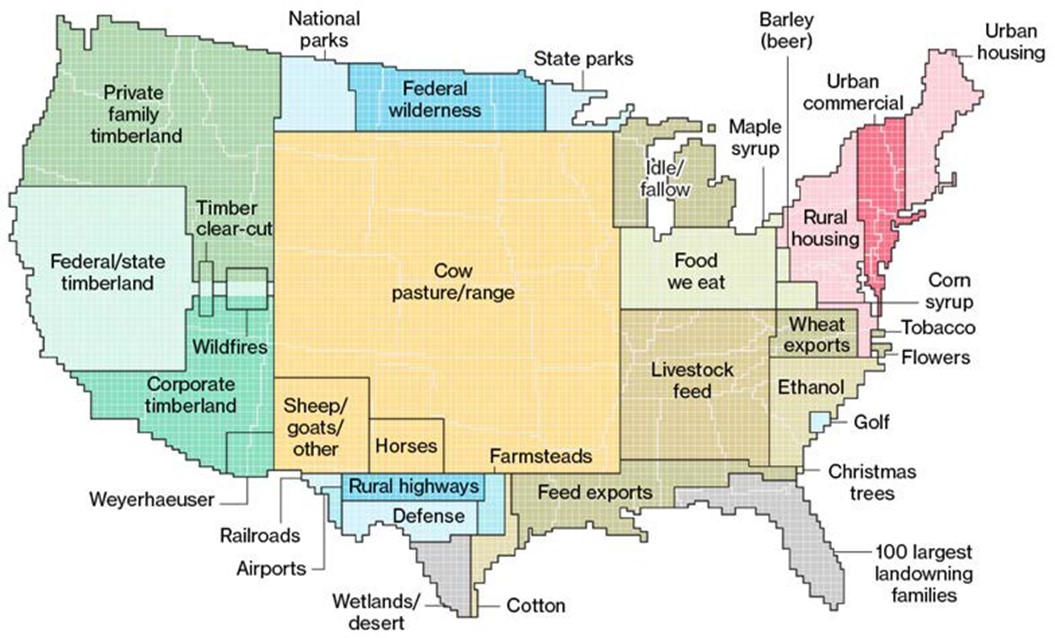
Solar projects can generate a substantial amount of energy without taking a significant percentage of land out of production. For example, a report from the Iowa Environmental Council found that it would only take 0.04% of the state's land to meet 10% of the state's electricity needs with solar.2 Compared to corn ethanol, the production of which utilizes more than 30 million acres of farmland across the United States, solar panels produce roughly 40 times more energy per acre.
The presence of solar panels can displace agricultural uses in their immediate footprint, whether the land was used as cropland, pasture, or for timber harvesting; however, solar farms do not permanently alter soils or agricultural potential, so the land use will remain viable when and if solar facilities are ultimately removed at the end of the lease term.
In the meantime, solar farms generate a constant flow of revenue and can act as a reliable, drought-resistant "crop" for local farmers and landowners. Access to a consistent annual revenue stream can help farmers keep their land in the family and support the preservation of their farms and way of life.
The presence of solar panels also helps prevent agricultural land from being lost to more permanent uses such as residential development, which poses a far greater threat to farmland in many parts of the country.
Of the nearly 900 million acres of farmland across the United States, the National Renewable Energy Laboratory estimates that solar will occupy fewer than one-half of one percent of those acres by 2030, or about twice the amount of land dedicated to golf courses nationwide.
Co-Location and Agrivoltaics
The simultaneous use of farmland for both solar photovoltaics and agriculture, or "agrivoltaics," is still in a research phase in the United States, but it has grown considerably in recent years, from 5 MW of capacity in 2012 to nearly 3 GW in 2020. Agrivoltaics can come in many forms, including solar grazing with sheep, hay and forage crops, or the creation of grassland or pollinator habitat that can enhance nearby agricultural operations.
Although most projects to date have been small-scale, the U.S. Department of Energy recently launched the Foundational Agrivoltaic Research for Megawatt Scale (FARMS) program to examine how agrivoltaics can scale up to provide new economic opportunities to farmers, rural communities, and the solar industry.
Even though most solar projects take acreage out of production while operating, cover crops and native seed mixes are planted to ensure that the land is rested, rejuvenated, and ready to be returned to agricultural use when the project is decommissioned.
Complementary Crops
Establishing native grass and meadow vegetation at a solar facility can offer a range of economic and ecological benefits. For farmers of crops that require pollination, the location of pollinator-attracting native vegetation at a solar farm has the potential to increase crop yields. A study by Argonne National Laboratory and the National Renewable Energy Laboratory identified over 800,000 acres of agricultural land near existing and planned large-scale solar projects that could benefit from pollinator habitat to the tune of up to $5.7 billion in annual revenue due to increased crop yields.3 Those benefits were quantified by a 2022 study in which researchers at North Carolina State University found that soybeans planted near pollinator habitat produced soybeans that were 6.5% larger than those that were located far away from pollinator habitat.4
At a solar site, native vegetation can create a cooler microclimate around solar panels, enabling the panels to be more efficient, both energetically and economically.
According to the Yale Center for Business and the Environment, over a project's lifetime, the reduction in annual maintenance for meadows provides a modest savings when compared to mowing requirements for turfgrass.
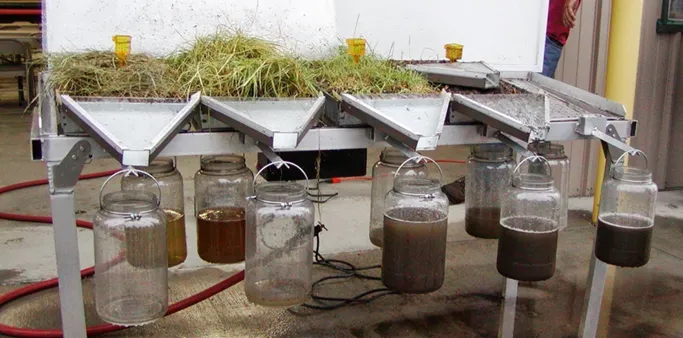
Ground cover planted under solar arrays can improve water retention and reduce stormwater runoff and soil erosion compared to traditional row crops. A 2008 study by the U.S. Geological Survey found "striking differences between turf and prairie vegetation" with water infiltration rates 10 times deeper in prairie vegetation compared to turf grass (4.7 feet compared to 0.46 feet).5
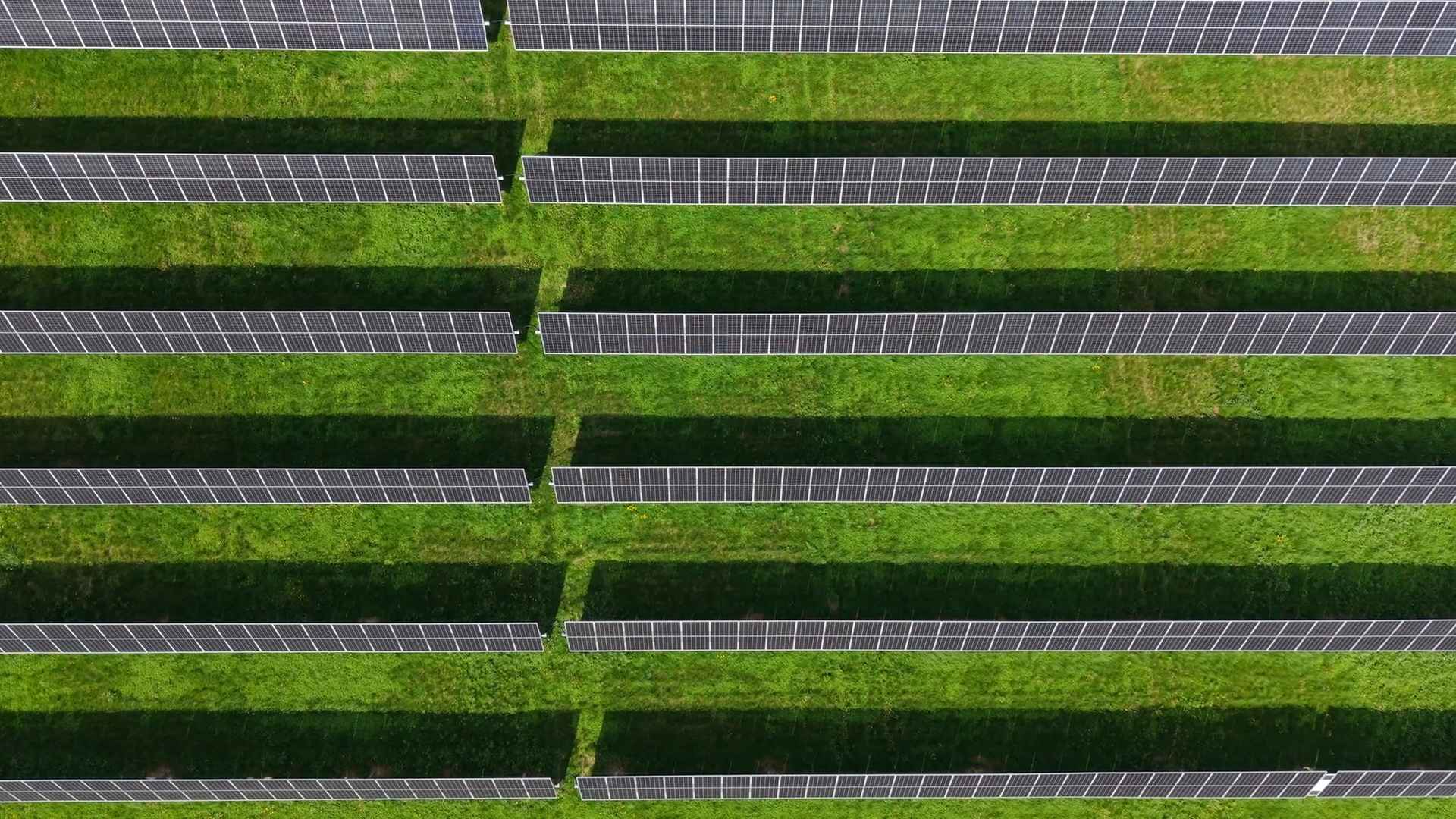
More than half of the area on a solar project is green space between the panels and is usually planted with native or noninvasive grasses.